What Finishing Options Are Available in Sheet Metal Fabrication Services? Sheet Metal Fabrication Services
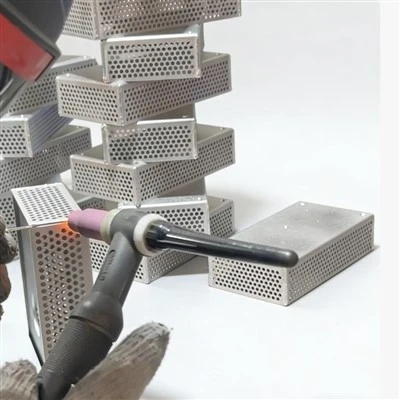
If you’ve ever worked with sheet metal—whether for a custom appliance part, a hardware bracket, a sleek sign, or even a prototype for a new product—you know that the fabrication process only gets you halfway there. We’ve all seen those raw, grey, slightly rough metal parts straight from the press brake or laser cutter: they work, sure, but they’re missing that final touch that makes them durable, look good, or function exactly as they should for years. As a sheet metal fabrication service, we get this question all the time from customers: “What finishing options do I actually have? And which one is right for my part?”
I get it—when you’re ordering parts, it’s easy to get overwhelmed by the long list of finishing terms you hear thrown around: powder coating, anodizing, passivation, galvanizing… the list goes on. A lot of people just pick the first one someone suggests, or go with raw metal because they think it’s cheaper. But that’s not always the case. Over the years, I’ve talked to small business owners, product designers, and even DIYers who learned the hard way: pick the wrong finish, and your custom bracket rusts in 6 months, or the coating chips off during assembly, or your brand-new sign fades in direct sunlight before the first quarter is over. So today, I want to break down the most common (and most useful) finishing options we offer, what they’re for, who they’re best for, and when you might want to skip one and go with another. No jargon, no fancy corporate speak—just real talk about what works, what doesn’t, and why.
First, let’s start with the basics: what even is a sheet metal finish? Simply put, it’s any process we do after cutting, bending, or welding the metal to change its surface properties. That could be improving corrosion resistance, making it look better, adding texture, or even making it easier to clean. Every finish is tailored to a specific use case, so there’s no “one size fits all.” Let’s go through the most popular ones we use here at our shop, and when we recommend each.
First up: powder coating. This is hands down the most requested finish we get, and for good reason. If you need parts that look good, hold up to wear and tear, and are affordable, powder coating is usually the way to go. Here’s how it works: we spray a dry, powdered polymer (think of it like colored paint, but it’s a powder, not liquid) onto the metal part, then bake it in an oven so the powder melts and fuses into a hard, uniform, super durable film.
I’ll be honest—powder coating isn’t perfect, but it’s solid for most applications. It comes in literally thousands of colors, textures, and finishes: from basic matte black to metallic silver, even hammered or textured looks that hide small scratches. It’s way more durable than liquid paint: it resists chipping, scratching, fading from sunlight, and even mild chemicals. We use it all the time for outdoor parts like fence brackets, patio furniture, appliance housings, and even car parts.
But there are a few caveats. First, it’s thicker than liquid paint, so if you’re working with very tight tolerances—like a bracket that has to fit perfectly into a 0.125-inch gap—powder coating might throw things off a little, since it adds a thin layer. Second, if you need a smooth, ultra-gloss finish, powder coating is great, but don’t expect the same mirror-like shine you get from polished metal. And finally, it’s not the best option for parts that will be submerged in water or harsh chemicals, because it can chip or peel over time if exposed to constant moisture.
Next, if powder coating is too rough or not durable enough for your use case, there’s liquid paint. A lot of people skip this because they think it’s outdated, but it has its place. Liquid paint is applied as a thin liquid (usually with a spray gun), then cured either with heat or air-dried. It’s thinner than powder coating, so it’s perfect for parts that need tight tolerances, or for complex shapes where you want very specific details to show through. We use liquid paint a lot for custom signs, small decorative parts, or prototypes where we need a very precise color match that powder coating can’t quite get.
The downside? Liquid paint is less durable than powder coating. It chips more easily, fades faster in sunlight, and can peel if exposed to moisture. It also emits more volatile organic compounds (VOCs) than powder coating, so it’s less eco-friendly. We always suggest liquid paint only when powder coating won’t work for tolerance or color needs.
Now, let’s talk about corrosion resistance, because that’s the biggest reason people reach for a finish in the first place. If your part is going to be outside, near salt (like on a boat or a coastal building), or exposed to a lot of moisture, raw metal won’t cut it. The most common corrosion-resistant finishes we offer are anodizing, passivation, and galvanizing.
First, anodizing. This is mostly for aluminum parts, and it’s a game-changer. Anodizing is an electrochemical process that creates a thick, protective oxide layer on the surface of aluminum. Unlike painting or coating, this layer is part of the metal itself, not something applied on top. So it doesn’t chip, peel, or fade like a coating would. It also comes in tons of colors: from clear (so you can see the natural aluminum beneath) to black, red, blue, even custom shades. We use anodizing all the time for electronic parts, outdoor signage, marine components, and any part that needs to look good and hold up to harsh conditions.
The catch? It only works on aluminum, so if your part is steel, brass, or another metal, you can’t use it. Also, while it’s very durable, it’s not indestructible—if you scratch it deep enough, you’ll get down to the raw aluminum underneath. But for most uses, anodizing is one of the best corrosion-resistant finishes out there.
Next, passivation. This one’s for stainless steel parts. A lot of people think stainless steel never rusts, but that’s not true—if it’s exposed to harsh chemicals or environmental contaminants, it can develop surface rust, called “red rust,” that ruins the part. Passivation is a chemical process we do to clean the surface of the stainless steel and create a protective layer that prevents rust. It’s super important for parts used in the food and medical industries, or for outdoor stainless steel parts like railings or equipment that get exposed to water or chemicals. We always add passivation to any stainless steel part that’s going to be used in a corrosive environment, because it’s a small step that makes a huge difference in the part’s lifespan.
Then there’s galvanizing, which is for carbon steel parts that need heavy corrosion resistance. Galvanizing is when we coat the steel with a layer of zinc, either by dipping the part in molten zinc (hot-dip galvanizing, which is the most common) or by applying a zinc coating electrolytically. Hot-dip galvanizing creates a very thick, tough layer that’s perfect for parts that will be outside for decades—like fence posts, highway guardrails, or utility parts. It’s extremely resistant to rust, even in coastal areas where salt exposure is high. The downside? It’s not the most attractive finish—hot-dip galvanized parts have a slightly dull, gray, uneven appearance, so if looks matter, you might want to add a powder coat over top for a better look while keeping the corrosion resistance.
Now, what if you want your part to look fancy—polished, shiny, like a high-end appliance or a decorative piece? We do those too. Polishing and buffing are finishes where we smooth and shine the metal surface by abrasion, usually with fine-grit wheels and compounds. We can get everything from a satin (smooth, low-shine) finish to a mirror-polished finish that looks like chrome. We use these for decorative parts, custom kitchen appliances, automotive trim, and any project where appearance is the top priority. The downside is that polished metal shows every scratch and smudge, so it’s not great for parts that will get a lot of wear and tear. Also, polished steel will rust if not protected, so we usually add a clear coat or anodize over polished aluminum or stainless steel to keep it looking shiny.
Wait, there are a couple of other finishes we get asked about all the time that I should mention. First, hot stamping, which is when we press a thin foil of metal (like gold, silver, or copper) onto the part with heat, to add a decorative logo or design. That’s super popular for custom signs, product branding, and gift items. And then there’s electropolishing, which is similar to passivation but uses electrochemical polishing to smooth stainless steel surfaces, making them more resistant to corrosion and easier to clean—great for medical equipment, food processing parts, or any part that needs to be sanitary.
Now, let’s talk about how to pick the right finish, because I know this is the part that trips most people up. When a customer comes to us with a new project, the first thing we ask is: “Where will this part be used? What’s most important for it—durability, appearance, cost, or precision?” Let’s break that down. If your part is going outside, near water or salt, and you need it to last 10+ years, go with either hot-dip galvanizing (for steel) or anodizing (for aluminum). If it’s a decorative part, or a prototype where you need exact color matching, go with liquid paint or polished metal. If you need tight tolerances, skip thick finishes like powder coating—go with a thin finish like clear anodizing or passivation. If cost is a big factor, powder coating is usually the most affordable all-around option, while anodizing or polishing will be more expensive.
I’ll be honest with you—we don’t just sell a finish and send the part out the door. Every time a customer gives us a call, we walk through their project, ask questions, and sometimes even suggest a finish they haven’t considered, because we’ve seen what works and what doesn’t. Last month, we had a customer who ordered 50 steel brackets for a coastal deck project, and he originally wanted powder coating. But we pointed out that coastal areas have a lot of salt in the air, which can eat through powder coating over a few years, and suggested hot-dip galvanizing instead. He went with that, and a couple of months later he called us to say the brackets were holding up way better than the powder-coated ones he’d used on his last deck. That’s the stuff we care about—we don’t just do the work, we help you get a part that works for your needs.
Another thing I want to mention: don’t sleep on secondary finishing steps. A lot of people forget that after finishing, you can add small touches like edge rounding, deburring, or even marking parts with a logo. Those small details can make a huge difference in the final product, and most of the time they don’t add much to the cost.
At the end of the day, sheet metal finishing is all about balancing function and appearance. You don’t want a part that looks great but falls apart in a year, and you don’t want a part that works fine but looks like a scrap heap. We’ve been in the sheet metal fabrication business for years, and we’ve handled hundreds of different finishing jobs, so we know the ins and outs of every option, the pros, the cons, and when to recommend which one.
If you’re working on a project and you’re not sure what finishing option is right for you, or you just want to chat through the details, feel free to reach out and talk to our team. We’re here to help you get the best part for your needs, no matter how big or small the job is. We don’t do pushy sales, we don’t overcomplicate things, and we always give you the straight facts about what will work (and what won’t) for your specific project.
Bending Forming References:
- Ashby, M. F., & Jones, D. R. H. (2012). Engineering Materials 2: An Introduction to Microstructures, Processing and Design. Butterworth-Heinemann.
- Browning, G. (2007). Metal Finishing: A Guide for Painting, Coating, and Surface Treatment. Industrial Press Inc.
- Davies, J. R. (Ed.). (2003). Surface Engineering for Corrosion and Wear Resistance. CRC Press.
- Society of Manufacturing Engineers. (2010). Sheet Metal Fabrication Handbook. SME.
Dongguan Xinchuan Precision Manufacturing Co., Ltd.
As one of the most professional sheet metal fabrication services manufacturers and suppliers in China, we offer a quick lead time for customized orders. Please feel free to buy precision sheet metal fabrication services made in China here from our factory. Contact us for quotation.
Address: #16 Gangjian Road, Changping Town, Dongguan City, Guangdong, China. 523000
E-mail: FreeQuote@xcprecision.com
WebSite: https://www.xcprecisions.com/
