Hey there, fellow theatre techs, event producers, and DIY stage warriors! If you’ve ever stared at a ceiling-mounted track full of hanging hardware and a stack of heavy stage curtains, wondering how the heck to get them up without knocking a light rig or your pride over, this one’s for you. Full disclosure: I’ve been part of a small but stubborn stage curtain supply crew for years, so I’ve helped hundreds of folks mess this up (and fix it) way more times than I can count. Today, I’m breaking down exactly how to hang stage curtains on a track—no fancy engineering degree required, just common sense, a little prep, and maybe a friend to lend an extra set of hands. Stage Curtains

First off, let’s skip the jargon you’d hear at a big trade show. When we say “track,” we’re talking about that metal bar bolted to your ceiling or the back of your stage, right? And “stage curtains” aren’t just random fabric—they’re heavy, durable, and designed to block light, hide backstage chaos, or make a grand entrance. The biggest mistake I see people make? Not prepping anything before they touch a curtain or a hook. Let’s start with the basics that’ll save you 30 minutes of frustration (trust me on this).
First step: Do a track check. No, not a walk-by, a real check. Grab a tape measure, a flashlight, and a screwdriver. Run the full length of your track—does it have any bends, dents, or loose bolts? If it’s wobbling when you wiggle it, tightening the mounting brackets is non-negotiable. A wobbly track means curtains will sag, pull unevenly, or even slip off mid-show (ask me how I learned that one during a high school play’s opening night). Next, count the number of slots or holes on the track—this tells you how many carriers (those little wheeled hooks that hold the curtains) you need. Most standard tracks come with carriers, but if you’re adding heavy-duty blackout curtains, grab a few extra—cramped carriers mean stuck curtains. Also, make sure your track is level! Use a spirit level (the cheap little bubble one works fine) to check every 2 feet. If it’s off, the curtains will hang crookedly, and you’ll spend more time adjusting than actually setting up. Pro tip: If your track’s mounted high and a ladder makes level-checking tricky, set one carrier in the middle of the track and see if it rolls smoothly all the way to both ends without getting stuck. If it binds, you’ve got a kink to fix.
Next, prep your curtains and carriers. This sounds obvious, but I’ve seen someone try to thread a 10-foot curtain through a carrier without folding it first. Let’s be real—stage curtains are big, heavy, and awkward. Don’t drag them on the ground (you’ll pick up dirt, which is a nightmare to get out, especially for blackout fabric). Lay them flat on a table, stage floor, or even the back of a truck bed if that’s easier. Now, look for the header (the top pocket or reinforced strip along the curtain’s edge) — that’s where the carriers go. If you’re using a pocket-style curtain (the most common for beginner hangs), you don’t need anything fancy—just slide each carrier through the header. Wait, but what if your curtains have eyelets or tabs instead? No problem—screw-in carriers or clips work here, just make sure the clips are rated for the curtain’s weight. Speaking of weight: Heavy blackout curtains need heavy-duty carriers, not the flimsy ones you’d use for a shower curtain. Mess up here, and you’ll have a carrier snapping mid-event.
Now, here’s the part most people rush: spacing the carriers. Rule of thumb is every 12 to 18 inches, depending on the curtain’s weight. Lightweight drapes can go every 18 inches, but heavy velour or blackout curtains need carriers every 12 inches. Why? It keeps the fabric from sagging between hooks, which not only looks messy but can also cause the curtain to tear over time. If you’re hanging a full stage drape that spans the entire track length, start with a carrier at each end, then space the rest evenly in between. Mark the spots with a piece of chalk on the header—this takes 2 minutes and eliminates guesswork.
Okay, now we get to the actual hanging part. This is where having a second person is game-changing—one on the ladder, one on the ground to pass carriers and steady the curtain. First, attach all the carriers to the track. How? Most carriers have a little lever on the side: lift the lever, slip the carrier over the top of the track, and snap it closed. Easy. If you’re using a track that requires sliding carriers into the bottom of the track (some older models do), just align the wheel part with the track’s opening and roll it in—no snapping needed. Once all carriers are on the track, gently lift the curtain and feed each carrier into the header. If you’re working alone, fold the curtain in half lengthwise, hold one end up to the track, and work your way along, sliding each carrier into the header as you go. Take it slow—rushing here means a tangled mess on the floor.
Now, adjust and tighten. Once all carriers are in place, pull the curtain to make sure it’s evenly spaced along the track. If it’s sagging in the middle, add an extra carrier there. If one side is higher than the other, go back to your level check—chances are the track is slightly off. Most tracks have adjustment points, so loosen a bracket, tweak the height, and retighten. For stage curtains meant to open and close (like a main drape), you’ll want a gap between the two ends when closed—about 6 inches is standard, so they don’t overlap too much or leave a huge light gap.
Wait a second, what about valances or swags? Oh right, those top curtains that sit above the main drape. Same process, just smaller—lighter weight, so you can use fewer carriers, and usually installed first so they sit above the main curtain. Just keep in mind if your track has multiple sections, valances go on the front part, main drapes on the back.
Now, let’s talk about common mistakes we’ve seen (and fixed) at our stage curtain supply shop. First, overloading carriers. We had a customer last month who tried to hang a 15-foot blackout curtain with only 5 carriers—half of them bent by intermission. Don’t do that. Second, not accounting for curtain overlap. If you’re hanging side curtains (the ones that hide backstage doors), make sure they extend past the stage opening by 1 to 2 feet on each side. No one wants to see a flash of a tech’s phone mid-performance. Third, forgetting to test the movement. Once everything’s hung, slide the curtain open and closed a few times. Does it stick at any point? Adjust the carrier spacing or the track level. Is it dragging on the floor? Loosen the brackets slightly so it sits higher.
And before you ask—what about motorized tracks? I know a lot of bigger venues use motorized ones now, and the process is similar, except instead of snapping carriers on manually, you pair them with the track’s motor unit. But for most community theatres, school productions, or small event spaces, manual track and hand-hung carriers are totally fine and way more affordable.
The key takeaway here is prep, prep, prep. Don’t grab a curtain and a ladder and wing it. A quick track check, proper carrier count, and even spacing will make the whole process way smoother, and your curtains will look professional, not like they were put up in a hurry the night before.
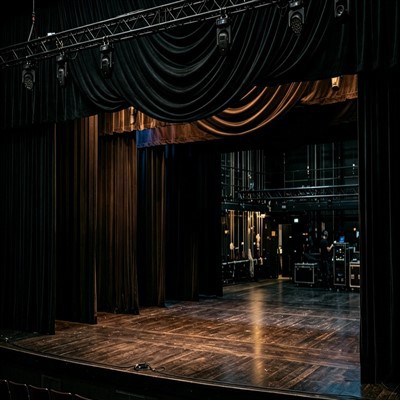
If you’re planning a big production, or you just need replacement curtains that work seamlessly with your existing track, we’ve got you covered. We’re a small stage curtain supply crew that’s been in the game for years, so we know exactly what works for school plays, corporate events, and community centers. Whether you need lightweight valances, heavy blackout drapes, or custom carriers for a weird-sized track, we can help you pick the right stuff and answer any last-minute questions. Just reach out to us when you’re ready to level up your stage setup—we’re here to make this part less of a headache and more of a win.
Stage Curtains References
Stagerights. (2020). Theatre Technical Manual: Curtain Installation & Track Maintenance. Dramatic Publishing.
Smith, J. (2018). DIY Stage Rigging for Small Venues. Performance Gear Press.
US Institute of Theatre Technology. (2021). Guide to Stage Curtain Hardware and Installation. USITT Publications.
JIANGSU HONGBO STAGE EQUIPMENT SCIENCE AND TECHNOLOGY CO., LTD.
As one of the most professional stage curtains manufacturers and suppliers in China, we’re featured by quality products and good price. Please rest assured to wholesale bulk advanced stage curtains for sale here and get quotation from our factory. Customized orders are welcome.
Address: Dasi Industrial Park, Gaogang District, Taizhou City, Jiangsu Province
E-mail: hongbowutai@gmail.com
WebSite: https://www.hbstageequipment.com/
