Hey there, if you’ve ever dug into motion control systems for automation, robotics, CNC machines, or even those fancy 3D printers cranking out precision parts, you’ve definitely heard the term “servo motor” thrown around. But if you’re like a lot of the engineers and operations folks I chat with every week, you might’ve stopped short when someone asked, “What’s the mechanical efficiency of a servo motor?” Servo Motor
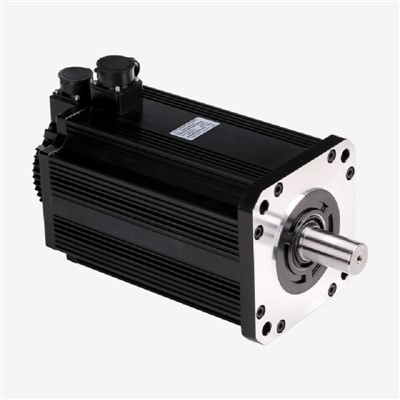
I’m not here to hit you with textbook jargon that’ll make your eyes glaze over—especially since I get questions like this from customers all the time, whether they’re sizing a motor for a new packaging line or troubleshooting a robot arm that’s burning too much power. As a servo motor supplier, efficiency isn’t just a spec on a data sheet to me—it’s the difference between a machine that runs 10 hours on a single shift and one that’s costing you an extra $500 a month in electricity. Let’s break this down like we’re chatting over a coffee at a trade show, no stuffy formulas unless they actually matter.
First, let’s get one thing straight: when we talk about servo motor efficiency, we’re almost always talking about mechanical efficiency, not electrical efficiency (we can touch on that later, but it’s a different animal). Simply put, mechanical efficiency is how much of the electrical power you pump into the motor turns into actual, usable rotational power at the shaft—you know, the torque and speed that does work like turning a gear or lifting a payload. Any power that doesn’t make it there is lost, usually as heat.
So why does this matter? Let’s use a real example. I had a customer last year running a custom woodworking CNC that was underperforming. Their old motor pulled 3.2 kW to do the job that a more efficient servo could pull 2.4 kW to do. That’s a 25% efficiency gap. Over a year of 8-hour days, 5 days a week, that’s roughly 416 hours of extra runtime. At a standard industrial electricity rate of $0.12 per kWh, that’s $0.12 * (0.8 kW) * 416 hours = $398.40 a year down the drain. Multiply that across a fleet of 20 machines, and we’re talking $8,000+ wasted annually. That’s the stuff that catches plant managers’ attention, right?
Now, let’s get into the numbers. Mechanical efficiency is calculated as a percentage, right? The formula is (Output Mechanical Power / Input Electrical Power) * 100. But here’s the catch: it’s not a fixed number. A servo motor’s efficiency isn’t like a light bulb that’s 90% efficient no matter how bright you run it. It changes based on two big factors: load and speed. Most servo motors peak in efficiency around 70-100% of their rated load, and at mid-range speeds. Run them at super low load (like 10% of capacity) or way above rated speed, and that percentage drops fast. We design our servos with this in mind—so when we spec a motor for a customer, we never just go by the peak efficiency number. We look at their actual operating cycle, because a motor that’s 85% efficient at peak load but only 55% efficient at the 20% load it runs for 30% of its shift is worse for their bottom line than one that’s 80% efficient overall across the full cycle.
What are the main things that eat into that efficiency, anyway? Let’s keep this practical, not a physics lecture. First up: friction. Servo motors have bearings, right? Those tiny metal or ceramic balls that let the shaft spin. Even with high-quality lubrication, there’s friction there, especially at startup when the oil hasn’t had time to spread. Our motors use precision ABEC 7 bearings, which cuts friction way down, but it’s still a small loss we can’t eliminate. Next is windage—yeah, that’s the air the rotor has to push through inside the motor casing, especially at high speeds. The bigger the rotor, the more windage, so we tune the casing design to minimize that without messing with cooling. Then there’s copper loss and iron loss—wait, you might’ve heard these terms, but let’s simplify them. Copper loss is the heat generated when electricity flows through the motor’s copper windings. Iron loss is the energy lost as the motor’s steel core magnetizes and demagnetizes as it spins. Modern servo designs use silicon steel cores and optimized winding patterns to trim these losses, which is why newer servos are way more efficient than models from 10 years ago.
Now, let’s talk real-world numbers because that’s what everyone actually cares about. When I pull up a spec sheet for our standard industrial servo motors, you’ll see peak mechanical efficiency ranging from 82% to 92%. Wait, that’s a big range—why? Because efficiency depends on the motor’s size, design, and intended use. Smaller servos (like the ones used in small robots or 3D printers, under 1 kW) tend to have lower peak efficiency, around 82-86%. They’re compact, so trade-offs have to be made for size over raw efficiency, and they often run at variable low loads. Larger servos (5 kW and up, used in CNC mills or material handling systems) are usually in the 88-92% range because they have more space for premium components and run at closer to their rated load most of the time. The high-torque servo motors we build for heavy lifting might be a touch lower, around 85-89%, because we prioritize torque output over peak efficiency for their specific job.
Here’s a common mistake I see customers make: fixating only on peak efficiency. Let’s say you have two motors: Motor A has a 90% peak efficiency, but drops to 75% when running at half load, which is exactly how your packaging line runs 40% of the time. Motor B has an 85% peak efficiency, but holds steady at 82% across all loads from 30% to 100%. Which one is better for you? Motor B, hands down. Let’s do the math: if your line uses 1 kW of power at half load, Motor A gives you 0.75 kW of output, Motor B gives you 0.82 kW—so you’re getting more work for less input, even with a lower peak number. That’s why as a servo supplier, we always ask for your load profile first, not just your required torque and speed numbers.
Another thing to note: mechanical efficiency vs. overall efficiency. Sometimes people mix these up, and it’s important to clarify. Overall efficiency would include things like the motor’s driver losses, wiring losses, and even the gearbox if you’re using one (most servo applications use a gearhead to boost torque). Oh right—gearboxes add their own efficiency loss, usually around 90-95% per stage. So if you pair a 90% efficient servo with a 92% efficient gearbox, your total system efficiency drops to around 83%, which is why we’ll often spec a higher efficiency servo to compensate if you need a gearbox.
Wait, let’s talk about when efficiency actually matters. If you’re running a small 3D printer that’s on 2 hours a day, a 82% efficient servo vs. an 85% one might only save you $10 a year. But if you’re running a 24/7 production line with 10 servos pulling 3 kW each, that extra 5% efficiency is $1,000+ a month. It also matters for heat management—less heat means less strain on the motor’s components, longer lifespan, and less need for extra cooling. I had a customer in automotive assembly who switched to our higher-efficiency servos and didn’t have to upgrade their existing cooling system, saving them another $15,000 on installation costs.
Now, what about factors that cause efficiency to drop over time? Servo motors are built to last, but wear and tear can creep in. If your bearing lubricant breaks down after 5 years, friction goes up, and efficiency drops by 3-5%. Dirt or debris getting into the motor casing can add more windage and friction too. That’s why regular maintenance—like checking bearing grease and keeping the motor clean—isn’t just a “nice to have” it’s a way to keep your efficiency high for years. We also offer free efficiency audits for our customers, where we use portable power meters to test their motors’ actual output and help them spot gaps.
Let’s bust a myth real quick: some people think “high efficiency” means more expensive. Yeah, our premium high-efficiency servos cost a bit more upfront, but we’ve crunched the numbers with dozens of customers and the payback period is usually 6-18 months, depending on usage. For a 10-year motor lifespan, that’s 8-9 years of pure savings. It’s the same thing as buying energy-efficient appliances for your home—you pay a bit more now, but you get that money back in lower utility bills.
At the end of the day, mechanical efficiency isn’t just a spec to put on a quote. It’s a core part of making your automation system work better, cheaper, and longer. As a servo motor supplier, our job isn’t just to sell you a motor—it’s to make sure the motor you buy is the right one for your job, with efficiency that aligns with how you actually run your equipment. If you’re curious about how your current servos are performing, or want to size a new system with better efficiency, feel free to reach out to discuss your needs.
And quick note: this isn’t one-size-fits-all—your application’s load, speed, cycle time, and environment all play a role, so a conversation about your unique setup is always the best way to get the right answer.
Switched Reluctance Motor References:
- Bose, B. K. (2006). Power Electronics and Motor Drives: Advances and Trends. Academic Press.
- Miller, T. J. E. (2001). Brushless Permanent-Magnet and Reluctance Motor Drives. Clarendon Press.
- International Electrotechnical Commission (IEC). 60034-2-1: Rotating electrical machines – Part 2-1: Standard methods for determining losses and efficiency from tests (excluding machines for traction vehicles).
Zibo Auric Mechanical and Electrical Technology Co., Ltd.
As one of the leading servo motor manufacturers and suppliers in China, we warmly welcome you to buy advanced servo motor for sale here from our factory. All customized motors are with high quality and competitive price.
Address: B419, High-tech Entrepreneurship Park, High-tech Zone, Zibo City
E-mail: cui@auricmotor.com
WebSite: https://www.auricmotor.com/
