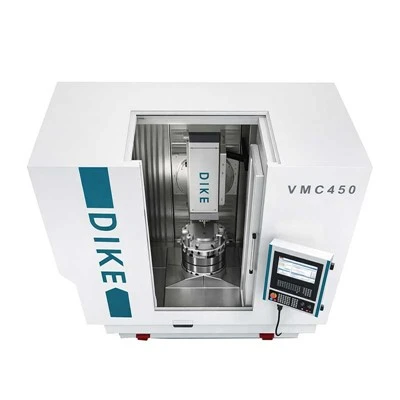
As a supplier of Turning and Grinding Compound Machine Tools, I’ve witnessed firsthand the critical role stability plays in the performance of these sophisticated pieces of equipment. A stable machine not only ensures high – precision machining but also significantly reduces downtime, leading to increased productivity and profitability for our customers. In this blog, I’ll share several effective strategies on how to improve the stability of a Turning and Grinding Compound Machine Tool during operation. Turning and Grinding Compound Machine Tool
1. Optimize the Machine’s Foundation and Installation
The foundation of a machine is like the roots of a tree; a solid foundation is crucial for the stability of the entire system. When installing a Turning and Grinding Compound Machine Tool, it’s essential to prepare a proper foundation. The floor should be flat, with a levelness tolerance within a very strict range. For large – scale machine tools, a reinforced concrete foundation is often required to provide sufficient support.
The way the machine is installed on the foundation also matters. Use high – quality leveling pads to ensure that the machine is evenly supported. Each pad should be adjusted carefully to eliminate any rocking or uneven loading. After the initial installation, the machine should be re – checked for levelness after a certain period of operation, as the vibration and thermal expansion during normal use may cause the machine to shift slightly.
2. Rigorous Maintenance of Key Components
The key components of a Turning and Grinding Compound Machine Tool, such as the spindle, guideways, and ball screws, have a direct impact on its stability.
Spindle Maintenance
The spindle is the heart of the machine, and its stability is vital for accurate machining. Regularly check the spindle’s bearings. Over time, the bearings may wear out due to continuous rotation and heavy loads. Replace worn – out bearings promptly to prevent vibration and noise, which can greatly affect the quality of the machining. Also, ensure proper lubrication of the spindle. Use the recommended lubricant and follow the specified lubrication intervals to maintain smooth operation.
Guideway Care
The guideways are responsible for guiding the movement of the machine’s components. Keep the guideways clean and free from debris. Regularly clean and lubricate the guideways to reduce friction. Inspect the guideways for signs of wear, such as scratches or unevenness. If any damage is detected, perform necessary repairs or replacements in a timely manner. A well – maintained guideway ensures smooth and precise movement, which is essential for the overall stability of the machine.
Ball Screw Inspection
Ball screws are used to convert rotary motion into linear motion. Inspect the ball screws regularly for signs of wear, backlash, or misalignment. Backlash in the ball screw can cause positioning errors and affect the stability of the machine. Adjust or replace the ball screws as needed to maintain accurate positioning and smooth operation.
3. Vibration Damping Techniques
Vibration is one of the main factors that can undermine the stability of a Turning and Grinding Compound Machine Tool. There are several ways to dampen vibrations.
Anti – Vibration Pads
Install anti – vibration pads under the machine. These pads are made of special materials that can absorb and dissipate vibrations. They act as a buffer between the machine and the floor, reducing the transmission of vibrations. Different types of anti – vibration pads are available, and the choice depends on the size, weight, and operating conditions of the machine.
Dynamic Vibration Absorbers
Dynamic vibration absorbers can be installed on the machine to counteract specific vibration frequencies. These devices are designed to resonate at the same frequency as the vibration source, thereby reducing the amplitude of the vibrations. By analyzing the vibration characteristics of the machine, the appropriate dynamic vibration absorbers can be selected and installed at the right locations.
4. Thermal Management
Thermal expansion and contraction can cause dimensional changes in the machine components, leading to instability. Effective thermal management is essential to maintain the stability of the Turning and Grinding Compound Machine Tool.
Cooling Systems
Install efficient cooling systems for the spindle, motors, and other heat – generating components. The cooling system helps to keep the temperature of these components within a stable range. For the spindle, a liquid – cooled system is often used to remove the heat generated during high – speed rotation. Regularly check the cooling system for proper operation, including the coolant level, flow rate, and temperature.
Thermal Insulation
Use thermal insulation materials to isolate heat – generating components from other parts of the machine. This reduces the transfer of heat and minimizes the thermal impact on the overall structure of the machine. For example, insulating the motor housing can prevent the heat from the motor from affecting the adjacent guideways or ball screws.
5. Operator Training
Operators play a crucial role in maintaining the stability of the machine. Proper operator training can significantly improve the machine’s performance.
Operating Procedures
Train operators on the correct operating procedures. This includes how to start and stop the machine, how to load and unload workpieces, and how to adjust the machining parameters. Following the correct procedures can prevent sudden changes in the machine’s operation, which may cause vibrations or instability.
Monitoring and Maintenance
Teach operators how to monitor the machine’s performance during operation. They should be able to detect early signs of problems, such as abnormal vibrations, noises, or changes in temperature. Operators should also be trained on basic maintenance tasks, such as cleaning, lubrication, and simple inspections. By involving operators in the maintenance process, potential problems can be identified and addressed in a timely manner.
6. Quality Control of Workpieces and Tools
The quality of the workpieces and tools used in the machine also affects its stability.
Workpiece Preparation
Ensure that the workpieces are properly prepared before machining. This includes proper clamping and balancing. An unbalanced workpiece can cause vibrations during rotation, which can affect the stability of the machine. Use appropriate clamping devices to secure the workpiece firmly in place.
Tool Selection and Maintenance
Select high – quality cutting tools that are suitable for the machining requirements. Dull or damaged tools can cause excessive cutting forces, leading to vibrations and instability. Regularly inspect and replace worn – out tools. Also, ensure that the tools are properly installed and aligned to minimize the cutting forces and improve the machining stability.
Conclusion

Improving the stability of a Turning and Grinding Compound Machine Tool during operation is a comprehensive task that involves multiple aspects, from the machine’s foundation and component maintenance to vibration damping, thermal management, operator training, and workpiece/tool quality control. By implementing these strategies, we can significantly enhance the stability of the machine, resulting in higher – precision machining, reduced downtime, and increased customer satisfaction.
CNC Lathes If you’re in the market for a high – performance Turning and Grinding Compound Machine Tool or need advice on improving the stability of your existing equipment, I’d be more than happy to assist you. Feel free to reach out to us for a detailed discussion on your needs and how our products can meet them. Let’s work together to achieve greater efficiency and precision in your machining operations.
References
- Groover, M. P. (2010). Fundamentals of Modern Manufacturing: Materials, Processes, and Systems. Wiley.
- Kalpakjian, S., & Schmid, S. R. (2009). Manufacturing Engineering and Technology. Pearson Prentice Hall.
Wuxi DIKE CNC Technology Co., Ltd.
As one of the most professional turning and grinding compound machine tool manufacturers and suppliers in China, we have world-leading production equipment and strong manufacturing capabilities. Please feel free to buy customized turning and grinding compound machine tool at competitive price from our factory. Also, pricelist is available.
Address: No. 2, Xianshan Road, Qianqiao Street, Huishan District, Wuxi City, Jiangsu Province, China
E-mail: wxdk@wxdike.com
WebSite: https://www.dike-cnc.com/
